


Build a House That Will Endure—Train Your Children in ‘the Way They Should Go’ [3:42]
Build a House That Will Endure—Train Your Children in ‘the Way They Should Go’ [3:42]

Download links:
Download links (with subtitles):


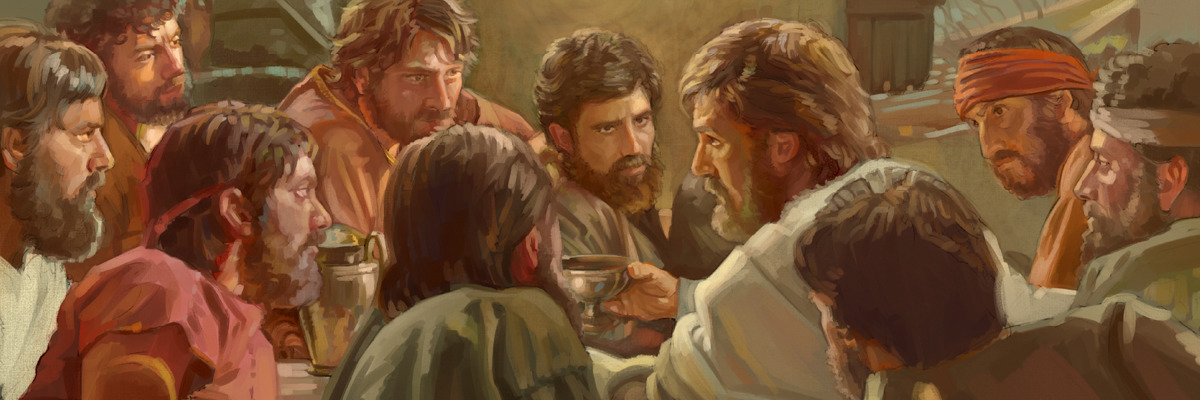
(“You are Peter, and on this rock,” “congregation” study notes on Mt 16:18, nwtsty)
You are Peter, and on this rock: The Greek word peʹtros in the masculine gender means “a piece of rock; a stone.” Here it is used as a proper name (Peter), the Greek form of the name Jesus gave Simon. (Joh 1:42) The feminine form peʹtra is rendered “rock,” and it may denote bedrock, a cliff, or a mass of rock. This Greek word also occurs at Mt 7:24, 25; 27:60; Lu 6:48; 8:6; Ro 9:33; 1Co 10:4; 1Pe 2:8. Peter evidently did not view himself as the rock on which Jesus would build his congregation, since he wrote at 1Pe 2:4-8 that Jesus was the long-foretold “foundation cornerstone,” chosen by God himself. Similarly, the apostle Paul referred to Jesus as the “foundation” and “the spiritual rock.” (1Co 3:11; 10:4) So Jesus was evidently using a play on words, saying in effect: ‘You, the one I called Peter, a Piece of Rock, have discerned the true identity of the Christ, “this rock,” the one who will serve as the foundation of the Christian congregation.’
congregation: This is the first occurrence of the Greek term ek·kle·siʹa. It comes from two Greek words, ek, meaning “out,” and ka·leʹo, meaning “to call.” It refers to a group of people summoned or called together for a particular purpose or activity. (See Glossary.) In this context, Jesus foretells the formation of the Christian congregation, made up of anointed Christians, who as “living stones” are being “built up into a spiritual house.” (1Pe 2:4, 5) This Greek term is frequently used in the Septuagint as an equivalent of the Hebrew term rendered “congregation,” which often refers to the entire nation of God’s people. (De 23:3; 31:30) At Ac 7:38, the Israelites who were called out of Egypt are referred to as a “congregation.” Similarly, Christians who are “called . . . out of darkness” and “chosen . . . out of the world” make up “the congregation of God.”—1Pe 2:9; Joh 15:19; 1Co 1:2.
keys of the Kingdom of the heavens: In the Bible, those who were given certain keys, whether literal or figurative, were entrusted with a degree of authority. (1Ch 9:26, 27; Isa 22:20-22) So the term “key” came to symbolize authority and responsibility. Peter used these “keys” entrusted to him to open up for Jews (Ac 2:22-41), Samaritans (Ac 8:14-17), and Gentiles (Ac 10:34-38) the opportunity to receive God’s spirit with a view to their entering the heavenly Kingdom.
What has this week’s Bible reading taught you about Jehovah?
*** w18 April p. 16 par. 7 Imitating Jehovah—A God Who Gives Encouragement ***
7 Jesus’ apostles often quarreled over who was the greatest among them, but Jesus patiently encouraged them to humble themselves and to become servants, not bosses. (Luke 22:24-26) Peter in particular disappointed Jesus several times. (Matt. 16:21-23; 26:31-35, 75) Rather than reject Peter, Jesus encouraged him and even commissioned him to strengthen his brothers.—John 21:16.
*** w17 August p. 3 pars. 1-2 Are You Willing to Wait Patiently? ***
“HOW long?” That was the question raised by the faithful prophets Isaiah and Habakkuk. (Isa. 6:11; Hab. 1:2) When composing Psalm 13, King David four times likewise asked: “How long?” (Ps. 13:1, 2) Even our Lord Jesus Christ asked this question when confronted with the faithless attitude of those around him. (Matt. 17:17) So we should not be surprised if we find ourselves at times asking the very same question.
2 What can cause us to ask: “How long”? Perhaps we have had to deal with some form of injustice. Or maybe we are enduring old age and sickness or the pressures of living in these “critical times” that are so “hard to deal with.” (2 Tim. 3:1) Or maybe the wrong attitudes of those around us are wearing us out. Whatever the cause, how encouraging it is to know that Jehovah’s faithful servants in the past felt free to express the same question that may loom in our minds, and they were not condemned for asking it!
*** w17 December p. 27 pars. 18-19 Young Ones—“Keep Working Out Your Own Salvation” ***
18 As we have seen, working out your own salvation is a serious responsibility. Some of the things involved are reading God’s Word and meditating on it, praying to Jehovah, and thinking of ways that Jehovah has blessed you as an individual. Applying yourself in those aspects will boost your confidence in your privilege of having a friendship with Jehovah. That, in turn, will move you to speak up about your beliefs.—Read Psalm 73:28.
19 Jesus said: “If anyone wants to come after me, let him disown himself and pick up his torture stake and keep following me.” (Matt. 16:24) Clearly, discipleship—including dedication and baptism—is an obligation for you as a Christian. Yet, it opens the door to countless blessings now and to everlasting life in God’s new world. You have every reason, then, to keep working out your own salvation!
*** w16 March p. 7 pars. 15-17 Young Ones—Are You Ready to Get Baptized? ***
15 Simply stated, when you dedicate your life to Jehovah, you give up ownership of yourself. You promise Jehovah that you will put the doing of his will ahead of everything else in your life. (Read Matthew 16:24.) Any promise should be taken seriously, but how much more so a promise made to Jehovah God! (Matt. 5:33) How, though, can you demonstrate that you have really disowned yourself and that you now belong to Jehovah?—Rom. 14:8.
16 To illustrate, imagine that a friend gives you a car as a gift. He hands you the title and says: “The car is yours.” But suppose your friend adds: “I will keep the keys. And I will be the one who drives the car, not you.” How would you feel about this “gift”? How would you feel about the giver?
17 Now think about what Jehovah rightfully expects of a person who makes a dedication to him, a person who tells him: “I am giving you my life. I belong to you.” What if that person were to start living a double life, perhaps secretly dating an unbeliever? What if he were to accept employment that crippled his whole-souled service in the ministry or attendance at Christian meetings? Would that not be like keeping the keys to the car? A person who dedicates himself to Jehovah is, in effect, saying: “My life belongs to you more than to me. If there is ever a conflict between what you want and what I am inclined to want, what you want will win—every time.” That would reflect the thinking of Jesus, who while on earth stated: “I have come down from heaven to do, not my own will, but the will of him who sent me.”—John 6:38.
*** w16 July p. 11 par. 16 Seek the Kingdom, Not Things ***
16 Do not miss the point of what Jesus is saying: “If this is how God clothes the vegetation of the field . . . , will he not much rather clothe you, you with little faith?” Most assuredly he will! Jesus’ disciples, though, were somewhat lacking in faith. (Matt. 8:26; 14:31; 16:8; 17:20) They needed stronger faith and trust in Jehovah. What about us? How strong is our faith in Jehovah’s desire and ability to provide for us?
*** w16 November p. 6 par. 8 “Keep On Encouraging One Another Each Day” ***
8 God did not feel that because he and his dear Son had worked together for ages, there was no need to commend and encourage Jesus when he was on earth. Instead, on two occasions Jesus heard his Father speak from heaven and say: “This is my Son, the beloved, whom I have approved.” (Matt. 3:17; 17:5) God thus commended Jesus and assured him that he was doing well. Jesus must have felt encouraged on the two occasions when he heard these words—at the beginning of his ministry and during the final year of his earthly life. Jehovah also sent an angel to strengthen Jesus when he was in anguish on the night before his death. (Luke 22:43) If we are parents, let us follow Jehovah’s example by regularly encouraging our children and giving them commendation when they do well. We should also give them extra support if they are facing tests of integrity day after day in school.
*** w18 February pp. 25-26 par. 12 Move Forward as a Spiritual Person! ***
12 As we work at cultivating spirituality, holy spirit will give us the power to transform our mind. With the spirit’s help, we can gradually begin to think more and more as Christ did. (Rom. 15:5) Additionally, it will help us root out fleshly desires and cultivate qualities pleasing to God. (Gal. 5:16, 22, 23) If we find that our mind pushes us toward materialistic thinking or fleshly desires, we should not give up. Keep asking for the spirit, and Jehovah will help you to redirect your mental attitude to focus on proper things. (Luke 11:13) Remember the apostle Peter. Several times in his life, he did not respond as a spiritual man should. (Matt. 16:22, 23; Luke 22:34, 54-62; Gal. 2:11-14) But he did not give up. Gradually, with Jehovah’s help, Peter developed Christlike thinking. We can do the same.
*** w18 March p. 7 par. 17 Baptism—A Requirement for Christians ***
17 The day of one’s baptism is a time for genuine rejoicing. It is also a time for sober reflection. Living up to one’s dedication involves hard work. That is why Jesus compared Christian discipleship to a yoke. Jesus’ disciples must “live no longer for themselves, but for him who died for them and was raised up.”—2 Cor. 5:15; Matt. 16:24.
*** w17 April p. 5 par. 10 “What You Vow, Pay” ***
10 The most important vow that a Christian can make is the one with which he dedicates his life to Jehovah. Why so? Because, in private prayer, he solemnly promises Jehovah that he will use his life to serve God forever, no matter what. To use Jesus’ words, a person thus ‘disowns himself,’ gives up all rights to himself, and vows to put God’s will above everything else in his life. (Matt. 16:24) From that day forward, ‘he belongs to Jehovah.’ (Rom. 14:8) Anyone who makes a dedication vow should take it very seriously, just as did the psalmist who spoke of the vows he had made to God: “With what will I repay Jehovah for all the good he has done for me? I will pay my vows to Jehovah in the presence of all his people.”—Ps. 116:12, 14.
*** w16 June p. 32 Do You Remember? ***
Why should the pope not be considered Peter’s successor?
Matthew 16:17, 18 does not say that the apostle Peter would be head of the Christian congregation. The Bible shows that rather than Peter having primacy, Jesus was to be the cornerstone of the congregation. (1 Pet. 2:4-8)—w15 12/1, pp. 12-14.
*** w16 September p. 29 par. 3 Parents, Help Your Children Build Faith ***
3 Jesus was not afraid to ask his followers what they believed. (Matt. 16:13-15) Imitate his example. It is best, in a relaxed setting, to invite your children to express their feelings. That includes talking about any uncertainties, or doubts, they may have. A 15-year-old brother in Australia wrote: “Dad often talks with me about my faith and helps me to reason. He asks: ‘What does the Bible say?’ ‘Do you believe what it says?’ ‘Why do you believe it?’ He wants me to answer in my own words and not simply repeat his or Mum’s words. As I got older, I had to expand on my answers.”
*** w15 5/15 p. 13 pars. 16-17 Be Watchful—Satan Wants to Devour You! ***
16 Satan can fool even zealous servants of Jehovah. For example, consider what happened when Jesus told his disciples that he was about to be killed. No doubt with good motive, the apostle Peter took him aside and said: “Be kind to yourself, Lord; you will not have this happen to you at all.” Jesus’ reply to Peter was firm: “Get behind me, Satan!” (Matt. 16:22, 23) Why did Jesus call Peter “Satan”? Because Jesus understood what was about to happen. The hour approached when he would die as a ransom sacrifice and prove the Devil a liar. At that critical juncture in human history, it was not a time for Jesus to “be kind” to himself. Relaxing his guard would have been precisely what Satan wanted him to do.
17 As we near the end of this system of things, we too are living in critical times. Satan wants us to relax our guard, to “be kind” to ourselves by carving out a niche in this world, thus losing our sense of urgency. Do not let that happen to you! Instead, “keep on the watch.” (Matt. 24:42) Never believe Satan’s deceptive propaganda that the end is far off—or that it is not coming at all.
*** w15 11/15 p. 11 par. 12 Train Your Teenager to Serve Jehovah ***
12 Jesus showed insight and understood where his disciples needed help. For instance, the apostle Peter meant well when he urged Jesus to be kind to himself in order not to be killed. Jesus, however, knew that Peter’s comment reflected faulty thinking. To help him and the other disciples, Jesus gave frank counsel, stated the consequences of a self-sparing attitude, and outlined the blessings of a self-sacrificing spirit. (Matt. 16:21-27) Peter learned the lesson.—1 Pet. 2:20, 21.
http://meekspaceng.blogspot.com.ng/
Download text and pictures here
Improving Our Skills in the Ministry—Using Questions Effectively
WHY IMPORTANT: If “the thoughts of a man’s heart are like deep waters,” then questions are like a bucket to draw them out. (Pr 20:5) Questions help us to involve our listeners. Answers to well-chosen questions often provide valuable feedback. Jesus used questions effectively. How can we imitate him?
HOW TO DO IT:
Ask viewpoint questions. Jesus asked a series of questions to determine his disciples’ point of view. (Mt 16:13-16; be 238 ¶3-5) What viewpoint questions might you ask?
Ask leading questions. To correct Peter’s thinking, Jesus asked questions and provided possible answers that led Peter to the right conclusion. (Mt 17:24-26) What leading questions might you ask to help someone reach the right conclusion?
Commend your listener. After a scribe “answered intelligently,” Jesus commended him. (Mr 12:34) How might you commend someone who gives an answer to a question?
Be respectful. We do not have the authority that Jesus had. So we must show respect especially to older ones, people we do not know, and those in positions of authority.—1Pe 2:17.
WATCH THE FIRST PART OF THE VIDEO DO THE WORK THAT JESUS DID—TEACH, AND THEN ANSWER THE FOLLOWING QUESTIONS:
Why is this an example of poor teaching, even though the information is accurate?
*** mwb16 September p. 8 Avoid These Pitfalls When Conducting a Bible Study ***
Talking Too Much: Do not feel that you must explain everything. Jesus used questions to help people think and arrive at the right conclusion. (Mt 17:24-27) Questions make the study lively and help you to determine what your student understands and believes. (be 253 ¶3-4) When asking a question, be patient and wait for the answer. If the student gives the wrong answer, instead of telling him the right answer, lead him to the correct conclusion by using additional questions. (be 238 ¶1-2) Talk at a pace that allows the student to grasp new ideas. —be 230 ¶4.
Making It Complicated: Avoid the temptation to relate all that you know on the subject. (Joh 16:12) Focus on the main point of the paragraph. (be 226 ¶4-5) Details, even interesting ones, can obscure the main points. (be 235 ¶3) Once the main point is understood by the student, move on to the next paragraph.
Why must we do more than just explain the information?
*** mwb16 September p. 8 Avoid These Pitfalls When Conducting a Bible Study ***
Just Covering Material: Our objective is to reach the heart, not cover material. (Lu 24:32) Utilize the power of God’s Word by focusing on the key scriptures in the lesson. (2Co 10:4; Heb 4:12; be 144 ¶1-3) Use simple illustrations. (be 245 ¶2-4) Consider the student’s personal challenges and beliefs, and tailor the lesson to him. Ask questions like these: “How do you feel about what you are learning here?” “What does this teach us about Jehovah?” “What benefit do you see in applying such counsel?”—be 238 ¶3-5; 259 ¶1.
WATCH THE SECOND PART OF THE VIDEO, AND THEN ANSWER THE FOLLOWING QUESTIONS:
How did the brother use questions effectively?
*** km 10/11 p. 1 pars. 1-4 Help the Householder to Reason ***
1 Which approach in the ministry is more effective—one that is dogmatic or one that helps the householder to reason and draw the correct conclusions? The apostle Paul used the latter when speaking to Jews in Thessalonica, and “as a result some of them became believers.” (Acts 17:2-4) What is involved in reasoning with others?
2 Consider Feelings and Background: A reasoning approach takes into account the feelings of those in the territory. Paul started a discourse to unbelieving Greeks at the Areopagus by mentioning things they likely knew and accepted. (Acts 17:22-31) Therefore, when preparing your presentation, consider the common beliefs and prejudices of people in your territory. (1 Cor. 9:19-22) If the householder raises an objection, try to find common ground, and build your conversation on that.
3 Use Questions Skillfully: We cannot give a traveler directions to help him reach his destination unless we know his current location. Similarly, we cannot help a householder to reach the proper conclusion unless we know his current opinion. Before reasoning with a listener, Jesus often asked questions to find out the person’s thinking. For example, when someone asked Jesus, “By doing what shall I inherit everlasting life?,” Jesus sought the man’s viewpoint before answering. (Luke 10:25-28) On another occasion, when Peter gave a wrong answer, Jesus skillfully used questions to correct his thinking. (Matt. 17:24-26) Therefore, if the householder asks a question or expresses a wrong opinion, we can use questions to help him to reason on matters.
4 When we help the householder to reason, we imitate the Great Teacher, Jesus, as well as other skillful evangelizers in the first century. We dignify the householder and show him respect. (1 Pet. 3:15) As a result, he may be more inclined to allow us to return.
What other aspects of his teaching can we imitate?
*** km 11/04 p. 4 pars. 3-4 Part 3—Conducting Progressive Bible Studies ***
3 Use Questions: Instead of explaining Bible texts to the student, have him explain them to you. You can prompt him to do this by the skillful use of questions. If the application of a scripture is obvious, you might simply ask how the text supports what is stated in the paragraph. In other cases, a more specific question or series of questions may be needed to direct the student to the proper conclusion. If further explanations are needed, these can be made after the student has responded.
4 Keep It Simple: A skilled archer often needs just one arrow to hit a target. Similarly, a skilled teacher does not require many words to make a point. He can convey information simply, clearly, and accurately. At times, you may need to do research in Christian publications to understand a scripture and explain it correctly. (2 Tim. 2:15) But avoid trying to explain every aspect of each scripture in the study. Include only what is needed to make the point under consideration.
What effect does our teaching have on others? (Lu 24:32)

Hiring and firing University graduates………lol
Jehovah likes the word “impossible”
Deut 2:7 “Jehovah has blessed you… You have lacked nothing”
Apostle Paul learned to trust less in himself and more on Jehovah
2 Cor. 12:7 “…that I might not be overly exalted”
vs 8: “three times I have begged the Lord to remove the thorn in the flesh”
vs 9: “My undeserved kindness is sufficient for you, for my power is being made perfect in weakness”
Paul realized that he’d have to rely on the power of the Christ
If the strength that we have come from God, then we will be strong indeed
Though Paul was dearly loved, he had people who were keen on criticizing him
How did Paul feel?
He felt hurt, he had feelings like us
Yet he didn’t stop going to meeting neither did he stop loving his brothers
Perhaps you too have a brother causing you problems
Perhaps he is teaching you useful qualities like empathy
We may have a little problem with someone in the congregation. And then he represents the congregation in prayer.
Paul prayed that the power of the Christ might remain over him like a tent
Whatever problem you’re facing, it’s only temporary like a tent
The back pain, rheumatism, death of a loved one etc, are only temporary
You’re only old once, because you’re going to live forever. So relax and enjoy your old age
Another indication of Paul’s feeling is in 2 Tim 1:4
As I remember your tears, I am longing to see you, so that I may get filled with joy.
Are you ashamed to tell members of the congregation you love them?
Are you afraid to look your son or daughter in the eyes and say “I love you?”
2 Cor 12:10 “So I take pleasure in weaknesses, in insults, in times of need, in persecutions and difficulties, for Christ. For when I am weak, then I am powerful.”
Other things bothered Paul. After doing his best to serve the brothers some also criticize him
2 Cor 10:10 “For they say: “His letters are weighty and forceful, but his presence in person is weak and his speech contemptible.”
Those men were not spiritual men
How did Paul view persecution?
2 Cor 1:8-10
Paul was not a super hero. He was able to endure because he called on Jehovah for strength
Paul didn’t allow faults of the past to destroy him
1 Cor 15:9 “For I am the least of the apostles, and I am not worthy of being called an apostle, because I persecuted the congregation of God.
Notice his positive attitude in Vs 10
But by God’s undeserved kindness I am what I am. And his undeserved kindness to me was not in vain, but I labored more than all of them; yet it was not I, but the undeserved kindness of God that is with me.
You too might have done some bad things in the past. But you should not allow it destroy your zeal. Paul understood the meaning of the term “undeserved kindness”
We have to be careful when thinking about the past because negative thoughts can destroy us
Thinking it this way:
Think of a person who starts up with drinking one bottlenof alcohol and then the second, the third, etc
Paul knew what to think about
Phil 4:8 “Finally, brothers, whatever things are true, whatever things are of serious concern, whatever things are righteous, whatever things are chaste, whatever things are lovable, whatever things are well-spoken-of, whatever things are virtuous, and whatever things are praiseworthy, continue considering these things.
Don’t do the devils work.
How did Paul help his brothers in Corinth?
Paul never wanted to impress anyone
1 Cor 2:1-5
Paul was letting the brothers know that a very simple person can deliver a very simple talk that is yet powerful
So when we prepare our talks are we thinking of how to impress people or show them the power of the Christ?
Paul was victorious because he put his trust and his faith in Jehovah
Paul a man with feelings like us conquered the world. So can we!
http://meekspace.blogspot.com.ng/
hypocrites: The Greek word hy·po·kri·tesʹ originally referred to Greek (and later Roman) stage actors who wore large masks designed to amplify the voice. The term came to be used in a metaphoric sense to apply to anyone hiding his real intentions or personality by playing false or putting on a pretense. Jesus here calls the Jewish religious leaders “hypocrites.”—Mt 6:5, 16.
Children . . . little dogs: Since dogs were unclean according to the Mosaic Law, the Scriptures often use the term in a derogatory sense. (Le 11:27; Mt 7:6; Php 3:2; Re 22:15) However, in both Mark’s account (7:27) and Matthew’s account of Jesus’ conversation, the diminutive form of the term meaning “little dog” or “house dog” is used, softening the comparison. Perhaps this indicates that Jesus was suggesting an affectionate term for household pets in non-Jewish homes. By likening Israelites to “children” and non-Jews to “little dogs,” Jesus evidently wanted to indicate an order of priority. In a household that had both children and dogs, the children would be fed first.
*** w18 January pp. 17-18 pars. 2-3 Why Give to the One Who Has Everything? ***
2 For 40 years, Jehovah supplied manna and water for the nation of Israel while they were in the wilderness. (Ex. 16:35) As a result, “they lacked nothing.” (Neh. 9:20, 21) Through the prophet Elisha, Jehovah performed the miracle of multiplying the small quantity of oil for a faithful widow. God’s gift enabled her to pay off her debts and after that to have enough money for her and her sons to live on. (2 Ki. 4:1-7) With Jehovah’s support, Jesus miraculously provided food and even money when needed.—Matt. 15:35-38; 17:27.
3 Jehovah has access to unlimited resources that can sustain his earthly creation. However, he still invites his servants to use their material things to support the work of his organization. (Ex. 36:3-7; read Proverbs 3:9.) Why does Jehovah expect us to use our valuable things to give back to him? How did faithful ones in the past support the activities of Jehovah’s representatives financially? How does the organization use the money that is donated today? The answers to these questions will be discussed in this article.
*** w17 February p. 22 par. 18 Jehovah Leads His People ***
18 God’s Word guided Jesus. From the beginning of his ministry, Jesus allowed the Scriptures to direct him. (Matt. 4:4) In fact, his obedience to God’s Word went as far as submitting to death on a torture stake. Even his final words before he died included quotations of Messianic prophecies. (Matt. 27:46; Luke 23:46) In contrast, the religious leaders of that time disregarded God’s Word whenever it contradicted their own traditions. Quoting Jehovah’s words through the prophet Isaiah, Jesus said about them: “This people honor me with their lips, but their hearts are far removed from me. It is in vain that they keep worshipping me, for they teach commands of men as doctrines.” (Matt. 15:7-9) Could Jehovah really choose any of those men to lead his people?
*** w16 May pp. 14-15 par. 8 How Do You Make Personal Decisions? ***
8 Consider how Jesus perceived what his Father wanted him to do. On two reported occasions, Jesus first prayed and then miraculously provided food for large crowds. (Matt. 14:17-20; 15:34-37) Yet, he refused to turn stones into bread when he was hungry and was tempted by the Devil in the wilderness. (Read Matthew 4:2-4.) Because he was familiar with his Father’s thinking, Jesus knew that he should not turn the stones into bread. Yes, Jesus realized that it was not God’s will that he use such power for his own personal benefit. By refusing to do so, he showed that he was relying on Jehovah for guidance and sustenance.
*** w15 6/15 p. 5 pars. 8-9 Christ—The Power of God ***
8 The psalmist said of Jehovah: “You open your hand and satisfy the desire of every living thing.” (Ps. 145:16) Reflecting his Father, ‘Christ, the power of God,’ frequently opened his hand and satisfied the desires of his followers. His doing so was not merely an expression of power. He was guided by his heartfelt concern for others. Let us consider Matthew 14:14-21. (Read.) Jesus’ disciples came to him to discuss the food situation. Not only may they themselves have been hungry but they were concerned about the plight of the famished and weary crowd that had followed Jesus on foot from the cities. (Matt. 14:13) What would he do?
9 With five loaves and two fish, Jesus fed about 5,000 men, as well as women and children! Are we not touched to think of the way Jesus used his miraculous power to care compassionately for entire families, including the little ones? The crowds “ate and were satisfied.” This suggests that there was an abundant supply of food. Jesus kindly provided, not a mere taste of bread, but a meal that would sustain the crowds for their long journey back home. (Luke 9:10-17) And 12 baskets were filled with the leftovers!
*** w15 12/15 p. 3 Do You Remember? ***
How do Jesus’ miracles illustrate his generosity?
At a wedding in Cana, Jesus turned some 100 gallons (380 L) of water into wine. Another time he miraculously fed over 5,000 people. (Matt. 14:14-21; John 2:6-11) Both times, he was imitating his Father’s generosity.—6/15, pp. 4-5.
*** w14 12/15 p. 18 Should You Change Your Mind? ***
Not long after Passover of 32 C.E., a Syrophoenician woman approached Jesus Christ in the area of Sidon. She repeatedly asked him to expel a demon from her daughter. At first, Jesus did not say a word in answer to her. He told his disciples: “I was not sent to anyone except to the lost sheep of the house of Israel.” When she persisted, Jesus said: “It is not right to take the bread of the children and throw it to the little dogs.” Demonstrating great faith, she replied: “Yes, Lord, but really the little dogs do eat of the crumbs falling from the table of their masters.” Jesus acceded to her request and healed her daughter.—Matt. 15:21-28.
Doing that, Jesus was imitating Jehovah in showing a willingness to change when the situation allows for such action. For example, God intended to exterminate the Israelites when they made a golden calf, but he let Moses entreat Him to reconsider His decision.—Ex. 32:7-14.
*** w12 11/1 p. 9 Question 3: Why Does God Allow Me to Suffer? ***
Jesus showed that God does not punish innocent people by causing them to suffer. Jesus cured the sick, the lame, and the blind. (Matthew 15:30) The miracles that he performed teach us two significant facts: First, Jesus used God’s power to alleviate suffering, not to cause it. Second, Jesus did not heal people dispassionately. When he saw people suffering, he was “moved with pity” for them. (Matthew 20:29-34) Jesus perfectly reflected his Father’s feelings about suffering. Therefore, from Jesus’ speech and actions, we learn that God is grieved by the pain He sees and that He wants to relieve it.—John 14:7, 9.
*** wp17 No. 5 p. 9 Did You Know? ***
Was Jesus’ illustration about “little dogs” meant to be insulting?
On one occasion, when Jesus was outside Israel’s borders in the Roman province of Syria, a Greek woman approached to ask for help. Jesus’ response included an illustration that suggested a comparison between non-Jews and “little dogs.” Under the Mosaic Law, dogs were deemed to be unclean animals. (Leviticus 11:27) But did Jesus mean to insult this Greek woman and other non-Jews?
Not at all. Jesus’ point, as he explained to his disciples, was that his priority at that time was to help the Jews. So he illustrated the point, saying to the Greek woman: “It is not right to take the bread of the children and throw it to the little dogs.” (Matthew 15:21-26; Mark 7:26) Among the Greeks and Romans, the dog was often a beloved pet that lived in its owner’s house and played with the children. So the expression “little dogs” might have called to mind a warm, endearing picture. The Greek woman picked up on Jesus’ words and replied: “Yes, Lord, but really the little dogs do eat of the crumbs falling from the table of their masters.” Jesus commended her faith and healed the woman’s daughter.—Matthew 15:27, 28.
*** w16 July p. 11 par. 16 Seek the Kingdom, Not Things ***
16 Do not miss the point of what Jesus is saying: “If this is how God clothes the vegetation of the field . . . , will he not much rather clothe you, you with little faith?” Most assuredly he will! Jesus’ disciples, though, were somewhat lacking in faith. (Matt. 8:26; 14:31; 16:8; 17:20) They needed stronger faith and trust in Jehovah. What about us? How strong is our faith in Jehovah’s desire and ability to provide for us?
*** w15 1/15 p. 24 par. 5 Let Jehovah Fortify and Safeguard Your Marriage ***
5 Some succumb to temptation because they turn to the wrong person for attention. In a world that lacks restraint and that thrives on every sort of immorality, it is all too easy for a deceitful and desperate heart to spawn romantic feelings for someone other than a marriage mate. (Read Jeremiah 17:9, 10.) Jesus said: “Out of the heart come wicked reasonings, murders, adulteries, sexual immorality.”—Matt. 15:19.
*** w15 6/15 pp. 9-10 par. 6 He Loved People ***
6 God’s power enabled Jesus Christ to perform a wide variety of astounding miracles. He cured not only leprosy but also every sort of disease and every sort of infirmity among the people. The inspired record tells us: “The crowd felt amazement as they saw the speechless speaking and the maimed being made sound and the lame walking and the blind seeing.” (Matt. 15:31) To perform such acts of compassion, Jesus needed no organ donors for transplants. He healed the very organs or body parts that were afflicted! And he healed people instantly, sometimes even from a distance. (John 4:46-54) What do these amazing examples show? That Jesus, now enthroned as heavenly King, has not only the power but also the desire to bring about permanent healing. Learning about the way Jesus treated people gives us confidence that in the new world, the Bible prophecy will be fulfilled: “He will have pity on the lowly and the poor.” (Ps. 72:13) Yes, Jesus will then act on his heart’s desire to help all afflicted ones.
*** w15 9/15 p. 14 par. 6 “Stand Firm in the Faith” ***
6 The wind and waves surrounding Peter as he walked on the water might be compared to the trials and temptations we face in our life of dedication to God. Even when these are severe, we can stand firm with Jehovah’s support. Recall that Peter did not sink because of a gust of wind or a big wave. Think back on the sequence of events: “Looking at the windstorm, he became afraid.” (Matt. 14:30) Peter lost his focus on Jesus, and then his faith wavered. We could begin to sink if we were to begin “looking at the windstorm,” focusing on its power and doubting that Jehovah will support us.
*** w15 10/15 pp. 21-22 par. 14 Serve Jehovah Without Distraction ***
14 Though Jesus refused to be distracted from his main purpose of preaching the good news, he was not always thinking about work. He accepted at least one invitation to a wedding and even contributed to the joy of the occasion by miraculously turning water into wine. (John 2:2, 6-10) He also accepted invitations to evening meals with close friends and potential disciples. (Luke 5:29; John 12:2) More important, Jesus frequently bought out time for prayer, private reflection, and needed rest.—Matt. 14:23; Mark 1:35; 6:31, 32.
*** w13 3/15 pp. 10-11 par. 13 Do You Have “a Heart to Know” Jehovah? ***
13 Jesus stated: “Out of the heart come wicked reasonings, murders, adulteries, fornications, thieveries, false testimonies, blasphemies.” (Matt. 15:19) Clearly, if a brother’s insensitive heart moved him to commit adultery or fornication and he remained unrepentant, he could lose God’s favor permanently. Yet, even a person who has not committed such a wrong might be allowing an improper desire to grow in his heart. (Read Matthew 5:27, 28.) This is where making a personal examination of the heart may help. If you scrutinized your heart, would you find an improper feeling toward someone of the opposite sex, secret longings that God would not condone and that need to be removed?
*** w13 4/1 p. 6 A Meaningful Life—Jesus Shows the Way ***
PRINCIPLE: “Happy are the merciful.”—Matthew 5:7.
HOW THE PRINCIPLE CONTRIBUTES TO A MEANINGFUL LIFE: Mercy involves showing compassion to others, being kind and considerate toward them. Jesus showed mercy to those in need. Moved by deep compassion, he took the initiative to relieve the suffering of others. (Matthew 14:14; 20:30-34) When we imitate Jesus in being merciful, we add meaning to our lives, for those who show mercy to others are happy as a result. (Acts 20:35) We can show mercy to others by our kind words and deeds, bringing relief to those who need our help. Does showing mercy really enhance our well-being?
*** w12 8/1 p. 29 Champions of the Truth ***
That was the theme of the talk given by Anthony Morris of the Governing Body. “The Bible never links faith and doubt as belonging together,” he said. “Faith repels doubt.” Satan succeeded in planting doubts in the mind of a perfect woman, Eve, so he can plant doubts in our mind. “Feed your faith, and doubts will starve to death,” Brother Morris said. He drew attention to the account of Peter, who “walked over the waters” but then, on “looking at the windstorm,” got afraid and started to sink. After catching hold of him, Jesus asked him: “Why did you give way to doubt?” (Matthew 14:29-31) “As busy as you missionaries will be in full-time service, others may be impressed at all that you do, as though you were walking on water, but when storms hit, do not give way to doubt.”
*** w11 2/15 p. 31 par. 12 Do You Hate Lawlessness? ***
12 You might start by asking yourself: ‘Do the songs I listen to glorify murder, adultery, fornication, and blasphemy? If I were to read the lyrics of certain songs to someone, would that person get the impression that I hate lawlessness, or would the words indicate that my heart is defiled?’ We cannot hate lawlessness in word while glorifying it in song. “The things proceeding out of the mouth come out of the heart,” said Jesus, “and those things defile a man. For example, out of the heart come wicked reasonings, murders, adulteries, fornications, thieveries, false testimonies, blasphemies.”—Matt. 15:18, 19; compare James 3:10, 11.
*** w11 3/15 p. 11 par. 20 Receive God’s Spirit, Not the World’s ***
20 Know the Bible well. When resisting Satan’s direct attack on his faith, Jesus quoted the Scriptures. (Luke 4:1-13) When confronting his religious opposers, Jesus used God’s Word as his authority. (Matt. 15:3-6) Jesus’ whole life revolved around knowing and fulfilling God’s law. (Matt. 5:17) We too want to keep feeding our mind with the faith-strengthening Word of God. (Phil. 4:8, 9) Finding time for personal and family study may prove to be a challenge for some of us. Rather than find time, though, we may have to make time.—Eph. 5:15-17.
*** w11 8/1 p. 16 How Can You Recognize True Worship? ***
3. What are some features that distinguish true worship?
True worshippers respect the Bible as God’s Word. They strive to live by its principles. So true religion differs from religion based on men’s ideas. (Matthew 15:7-9) True worshippers do not preach one thing and practice another.—Read John 17:17; 2 Timothy 3:16, 17.
The true religion honors God’s name, Jehovah. Jesus made God’s name known. He helped people to know God and taught them to pray that God’s name be sanctified. (Matthew 6:9) Where you live, which religion promotes the use of God’s name?—Read John 17:26; Romans 10:13, 14.
responding to jehovah’s witnesses and others who deny essential Christian truths
MeekSpaceNG..
your right to the know...
a catalogue of life conversations with Adepeju
A great Olukayode Ogunbayo site
Premium Times - Nigeria'bs leading online newspaper, delivering breaking news and deep investigative reports from Nigeria
Free Theocratic Materials and Downloads
MeekSpaceNG..
Jehovah's Witnesses | jwleaks.org
Just another WordPress.com weblog
Just another WordPress.com weblog
Just another WordPress.com site
Random thoughts of an African Journalist
The greatest WordPress.com site in all the land!
...your right to know
Stuff and things.











 free theocratic materials and downloads ...